THE BATH
A thickened surface
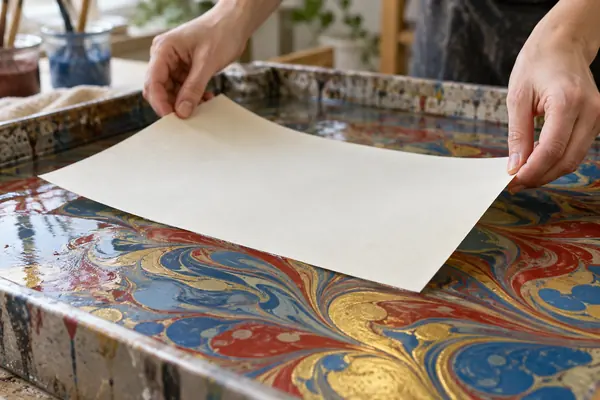
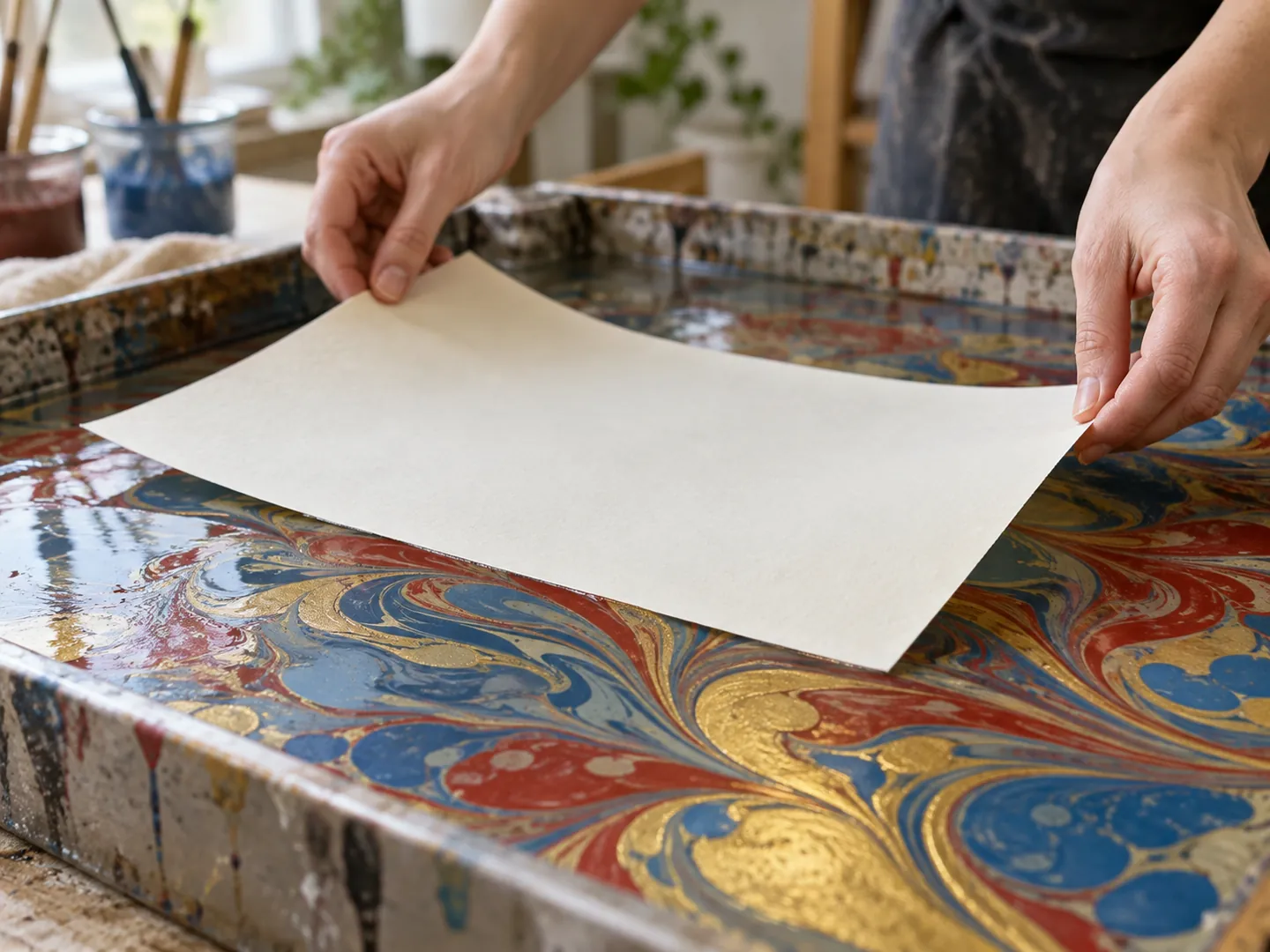
Canada's Library of Parliament marbles on distilled water thickened with carrageenan, an extract from seaweed, so drops of colour float and spread.
Spot a pattern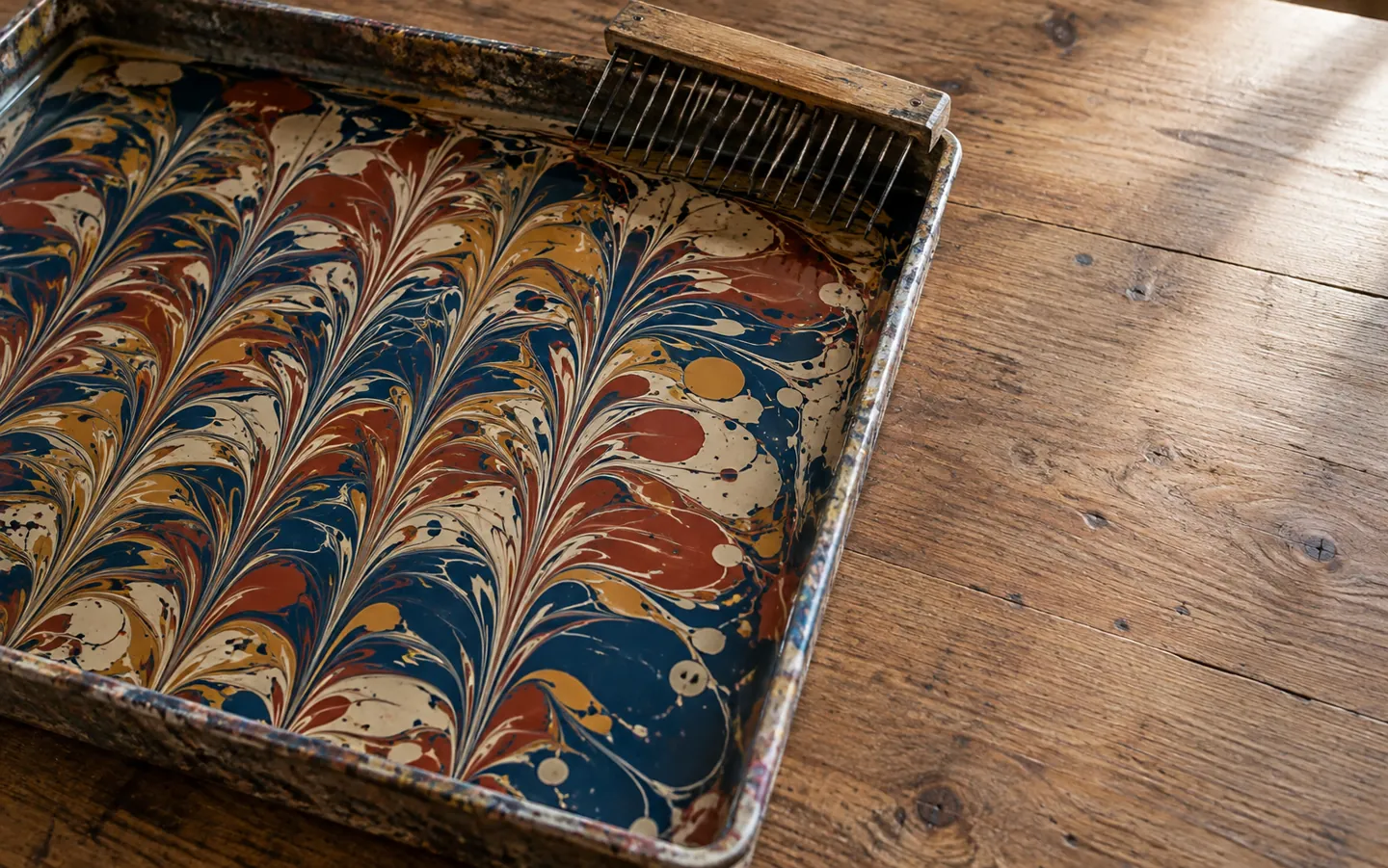
THE ART OF MARBLED PAPER
ONE PRINT no two sheets alike
AI-generated image, not a photograph of a real person or place.
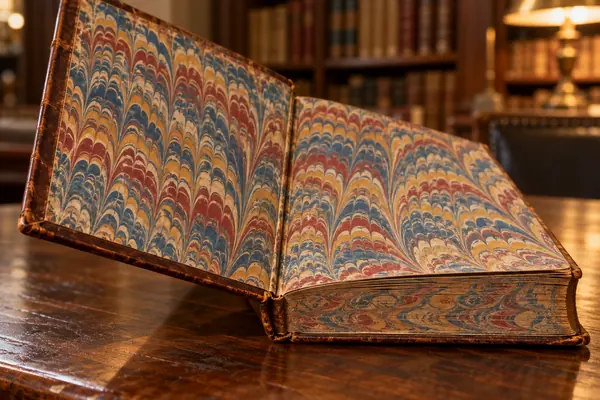
Open an old book and the inside cover may swirl like stone.
That is marbled paper. The colours were floated on a thickened bath, combed into a pattern and lifted off in a single print. The craft goes back at least to 12th-century Japan, and Turkish ebru is now recognised by UNESCO.
THE SHORT ANSWER
Every sheet is a one-off print.
The pattern lives on the water for a moment.
THE BATH
Canada's Library of Parliament marbles on distilled water thickened with carrageenan, an extract from seaweed, so drops of colour float and spread.
Spot a patternTHE PRINT
Paper treated with an alum mordant is laid gently on the bath. The pattern transfers almost at once; the sheet is lifted, hung to dry and pressed.
The stepsIN BOOKS
Marbled papers were common in bookbinding from the 17th to the 19th centuries, linking cover to text block and protecting the pages.
Look inside a book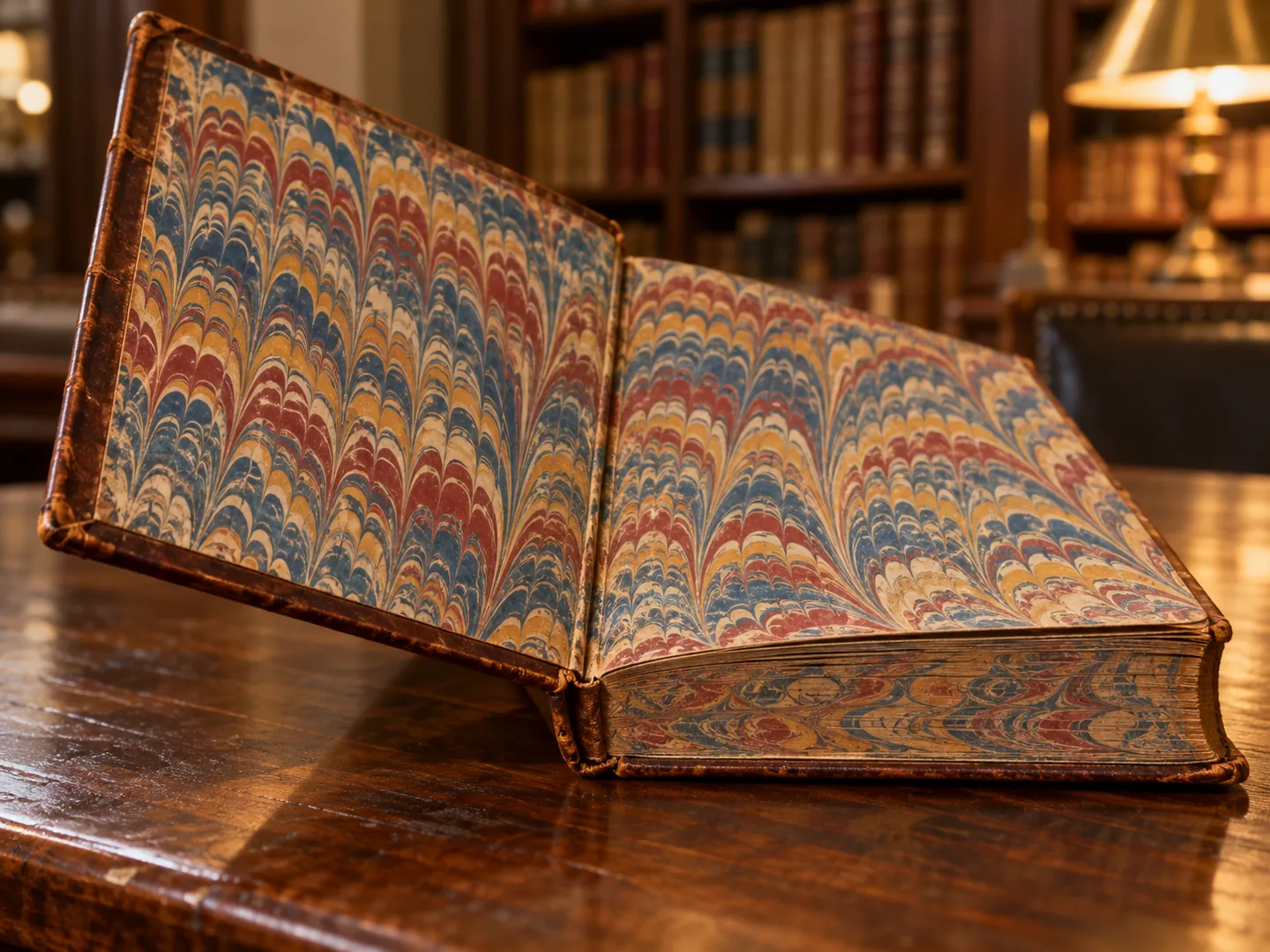
THE STEPS
This is how Canada's Library of Parliament describes its own marbling studio, which makes about 100 papers a year for official projects.
Fill a shallow pan with distilled water thickened with carrageenan, a seaweed extract.
Drop diluted colours onto the surface with droppers or broom-straw whisks.
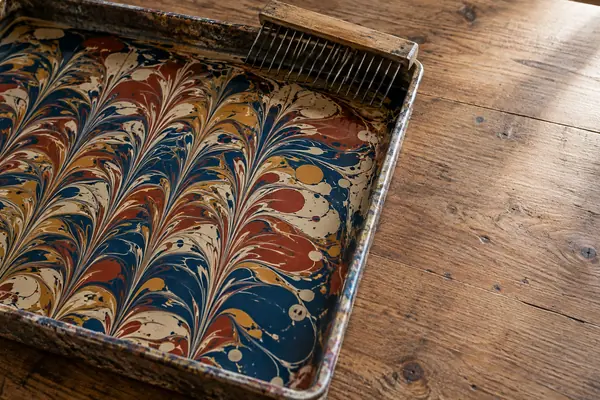
Guide the floating colour into patterns with styluses, combs and rakes.
Lay mordant-treated paper on the bath, lift it, hang it to dry and press it flat.
TWO NUMBERS WORTH KNOWING
How far back marbling goes,
and how long the basics take.
12th century
Japanese suminagashi dates back to
Concrete examples of marbled paper start to appear in Japan around the 12th century. The art later emerged in Turkey as ebru and reached Western Europe by the 1600s.
ORIGINS · AIP / LIBRARY OF PARLIAMENT
2+ years
Time to learn the basic skills
UNESCO says achieving basic skills in ebru takes at least two years, passed on from master to apprentice. Ebru was inscribed on its intangible heritage list in 2014.
EBRU · UNESCO
The origins of marbling are unclear: the Library of Parliament notes that several countries, including China and countries in the Middle East, claim the process.
A QUICK PATTERN CHECK
Pick a classic pattern to see how marblers make it. The bar shows how many working steps it takes on the bath.
Pattern descriptions from the Armagh Robinson Library and the Library of Parliament of Canada. Names and methods vary between marblers and countries.
LOOK INSIDE A BOOK
A University of Leicester library blog notes that marbled endpapers connect the cover to the book block and protect the text from wear. Some books have marbled edges too, but endpapers in restored books may be later replacements.
Marbling also had a security role. The AIP library says Turkish ebru was used to deter forgery of government documents, because erasing would disturb the pattern, and the Armagh Robinson Library notes marbled edges could reveal removed pages.
In conversation
Paper decorated by floating colours on a liquid bath, arranging them into a pattern with tools such as combs and styluses, and laying the paper on top so the pattern transfers in one print.
The bath is thickened. The Library of Parliament of Canada uses distilled water thickened with carrageenan, a seaweed extract. UNESCO describes ebru colours mixed with a few drops of ox-gall before they are sprinkled on.
Its origins are unclear and several countries claim it. Japanese suminagashi goes back to the 12th century; the art later emerged in Turkey as ebru and spread to Western Europe by the 1600s.
Marbled papers were common in bookbinding from the 17th to the 19th centuries. They link the cover to the text block, protect the pages from wear and, because no two are alike, could reveal tampering.
No. The Armagh Robinson Library notes that no two marbled designs would ever be the same, and a Leicester library blog adds that you never know exactly how a sheet will turn out.
Each figure on this page comes from the sources below.
ABOUT THIS NAME
doodlemarble.com is part of the DoodleSale portfolio. It isn't in an auction right now, but you can ask about leasing it.